

US admiral who blasted crypto is now running a Bitcoin node for America’s security

Admiral Samuel Paparo appeared before the Senate Armed Services Committee on Apr. 21 for a posture review for the US Indo-Pacific Command ahead of the fiscal year 2027 defense request. Paparo reportedly disclosed that INDOPACOM is running a Bitcoin node and treating the protocol's architecture as operationally relevant for securing networks and projecting po...
Key takeaways
- 1US Indo-Pacific Command (INDOPACOM) is running a Bitcoin node for network security operations.
- 2Admiral Samuel Paparo disclosed Bitcoin's protocol architecture as operationally relevant for US defense.
- 3Bitcoin adoption by US military indicates institutional recognition of crypto's security infrastructure value.
Coins in this story

Why it matters
US military adoption of Bitcoin legitimizes cryptocurrency as critical infrastructure, potentially influencing Indian regulatory stance and institutional investor confidence. This signals geopolitical importance of crypto protocols beyond financial markets.
Explore how Regulation is shaping crypto markets — aggregated stories, leading coins, and weekly momentum.
Explore narrativeRelated stories
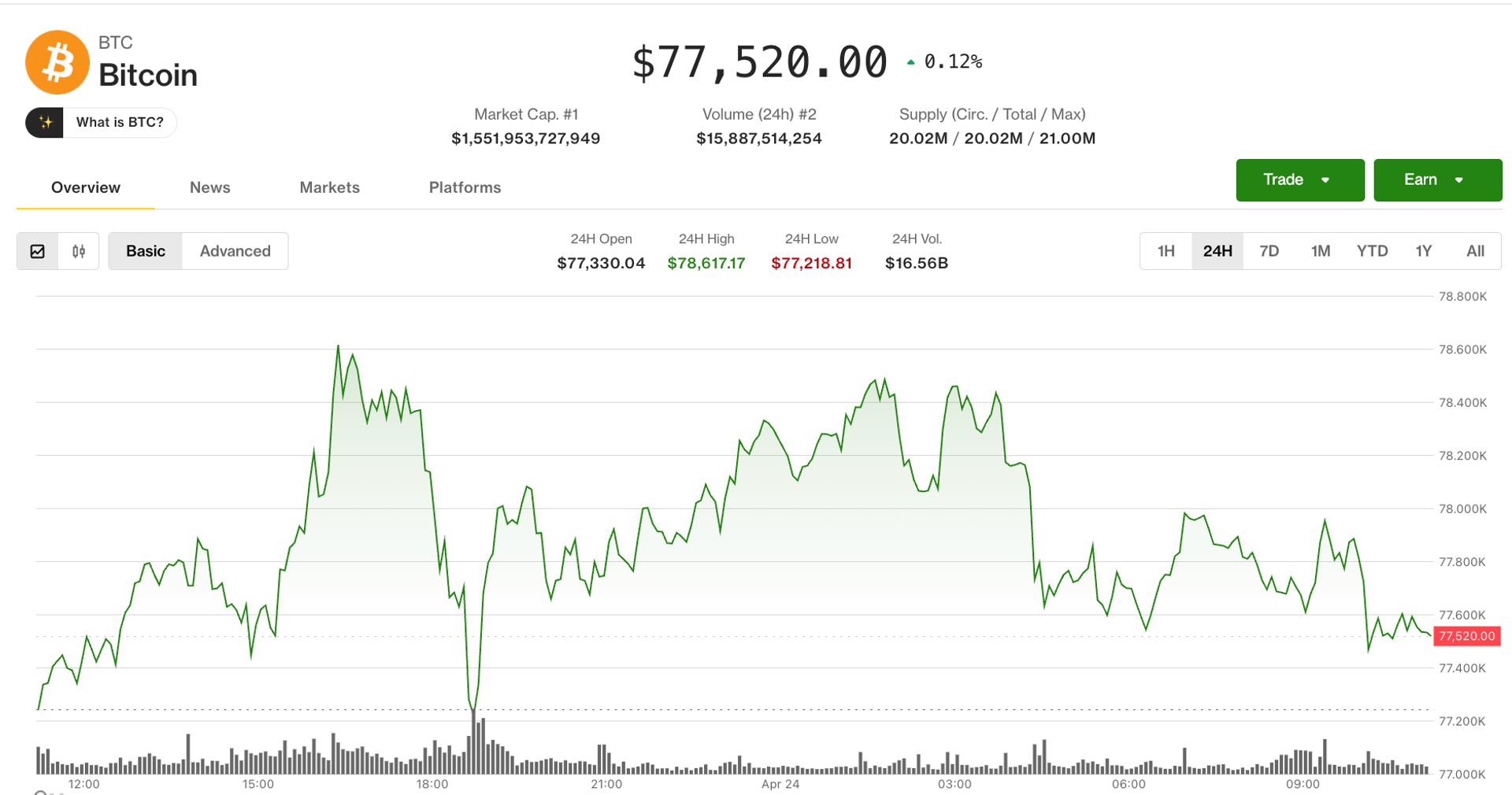
Bitcoin stalls below at $77,500 as volatility cools, traders unwind leverage
BTC holds a tight range as open interest drops, signaling cooling momentum, while altcoins show mixed performance and ZEC attracts fresh bullish interest....

Michael Saylor says the bitcoin winter is over. Some experts agree, with caveats.
Market analyst Mati Greenspan said bitcoin has not gone through a “winter,” rather a pullback within a broader bull market, adding the next leg up for bitcoin will be driven by nation-state adoption....

U.S. government sits on $26.5 billion gain from Intel stake, as shares surge 22%
U.S. government holds unrealized $26.5 billion gain on Intel stake after shares surged 22% on strong earnings. Position acquired through August CHIPS Act conversion now valued at $35.4 billion. Intel's Data Center and AI segment drove growth, up 22% to $5.1 billion as Xeon processor demand accelerates. Government also holds warrants for additional 5% ownership.