

U.S.-Iran strikes rattle global markets, send bitcoin to 6-week low

Your day-ahead look for May 28, 2026...
Key takeaways
- 1Bitcoin fell below $73,000 to 6-week low after U.S. strikes on Iran escalated geopolitical tensions.
- 2Permanent ceasefire odds plummeted to 8% by month-end from 70% peak; Brent crude jumped 4% to $96/barrel.
- 3BlackRock's Bitcoin ETF shed $528 million Wednesday, second-largest daily outflow since January 2024 launch.
Coins in this story


Why it matters
Geopolitical escalation in Iran-U.S. tensions directly impacts crypto volatility and oil prices, which influence global inflation expectations affecting RBI policy. Indian retail investors face near-term consolidation risk with bitcoin trapped below key technical levels amid institutional outflows and upcoming U.S. inflation data.
Explore how ETF is shaping crypto markets — aggregated stories, leading coins, and weekly momentum.
Explore narrativeRelated stories
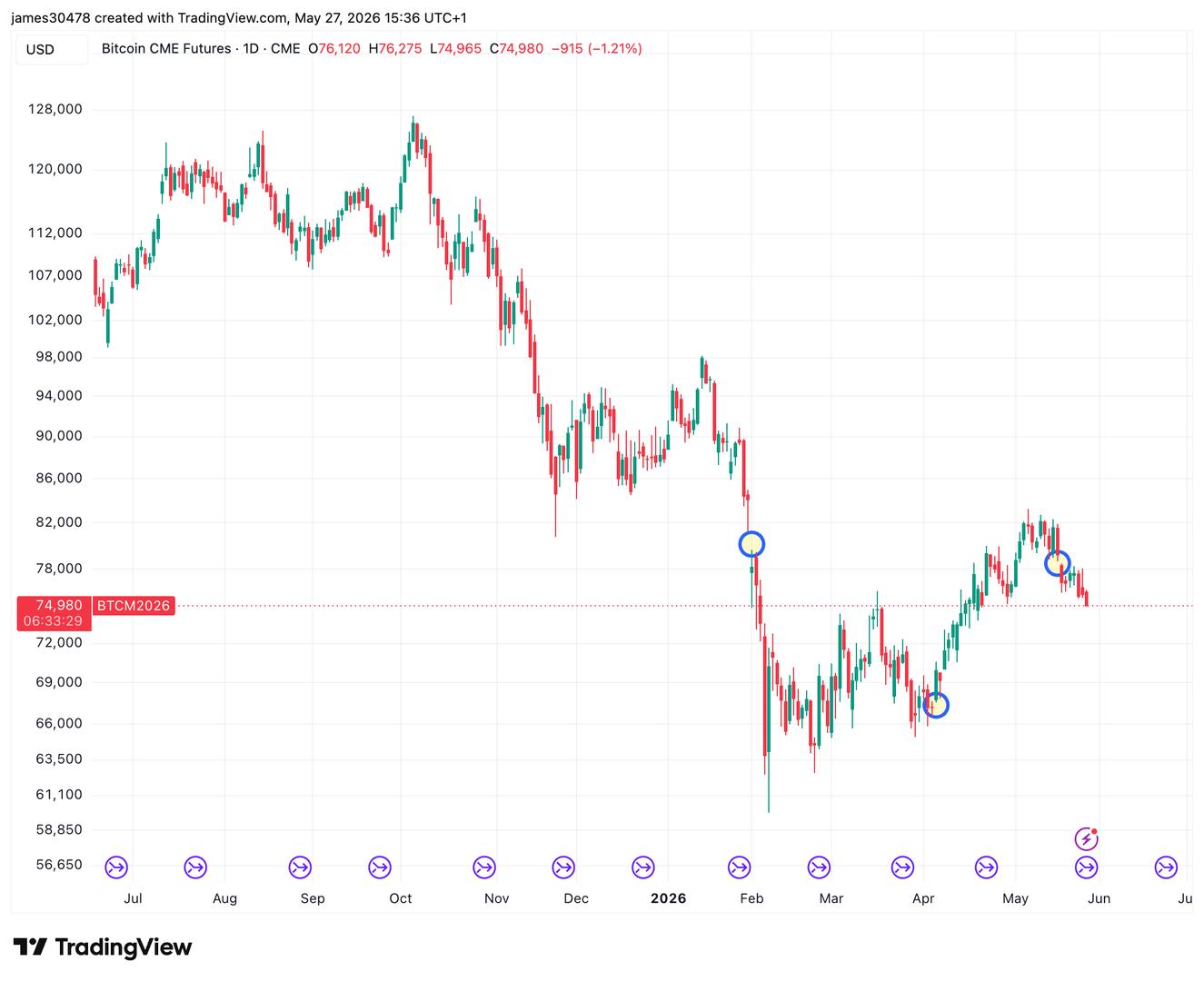
Bitcoin’s famous CME gaps are about to disappear, though three remain unresolved
CME Bitcoin futures now trade 24/7 on Globex, eliminating the famous weekend gap that traders exploited for years. The shift reduces institutional hedging friction but three unfilled gaps remain at $80,000, $78,500, and below $70,000. However, liquidity still concentrates in BlackRock's IBIT ETF options ($27-30 billion open interest) versus CME options ($800-900 million), signaling institutional preference for spot-linked derivatives over futures markets.

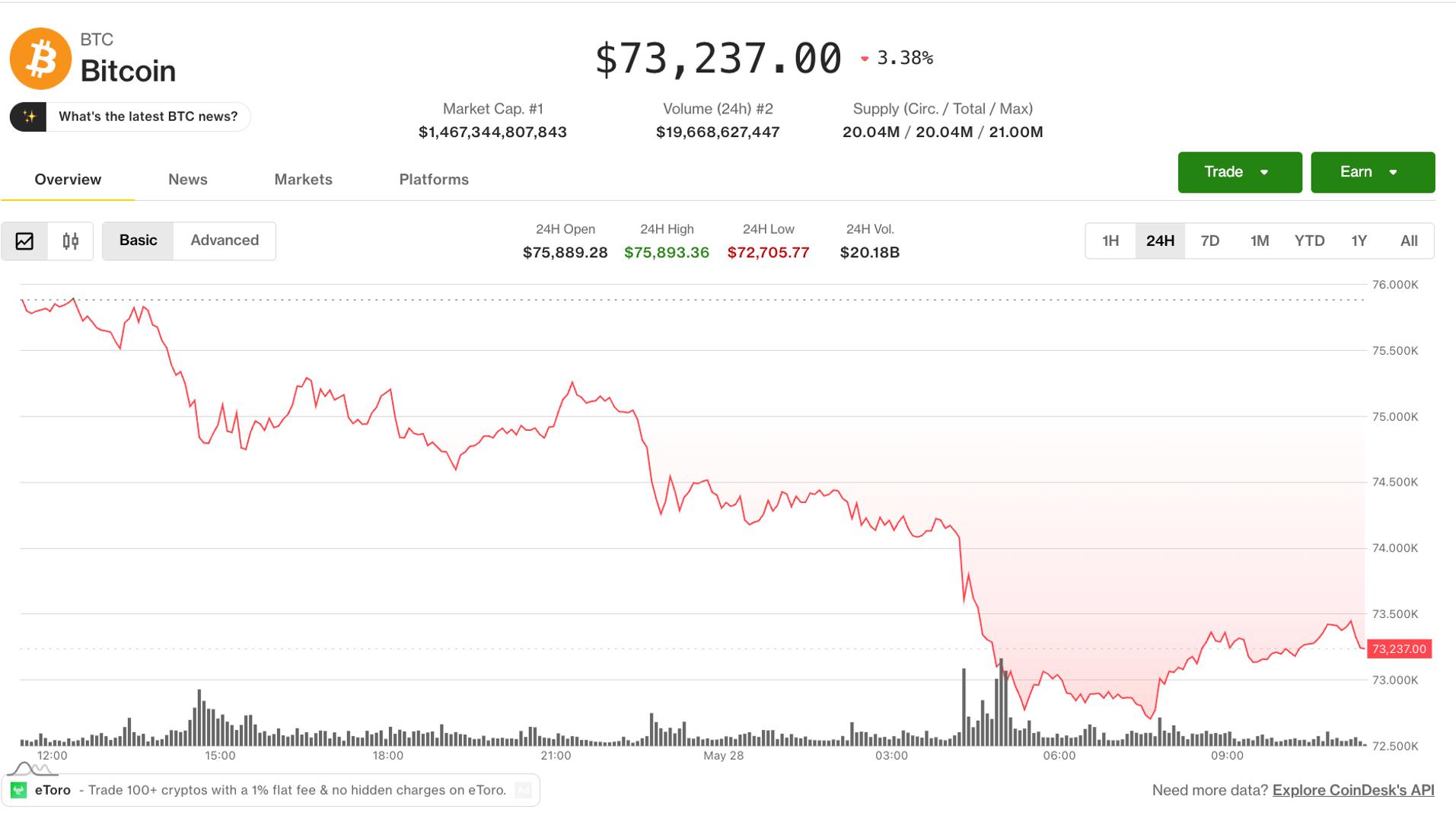
Crypto slides on Hormuz airstrikes as $897 million in long liquidations pile up
Bitcoin fell to April lows below $73,400 and Ether dropped below $2,000 after U.S. airstrikes in the Strait of Hormuz triggered inflation concerns and risk-off sentiment. Nearly $898 million in leveraged long positions liquidated in 24 hours. Ether's record open interest amid price weakness signals traders adding shorts. Eight billion in options expire Friday with bitcoin's max pain at $75,000.