

CoinDesk 20 performance update: Stellar (XLM) jumps 10.5% as nearly all assets fall
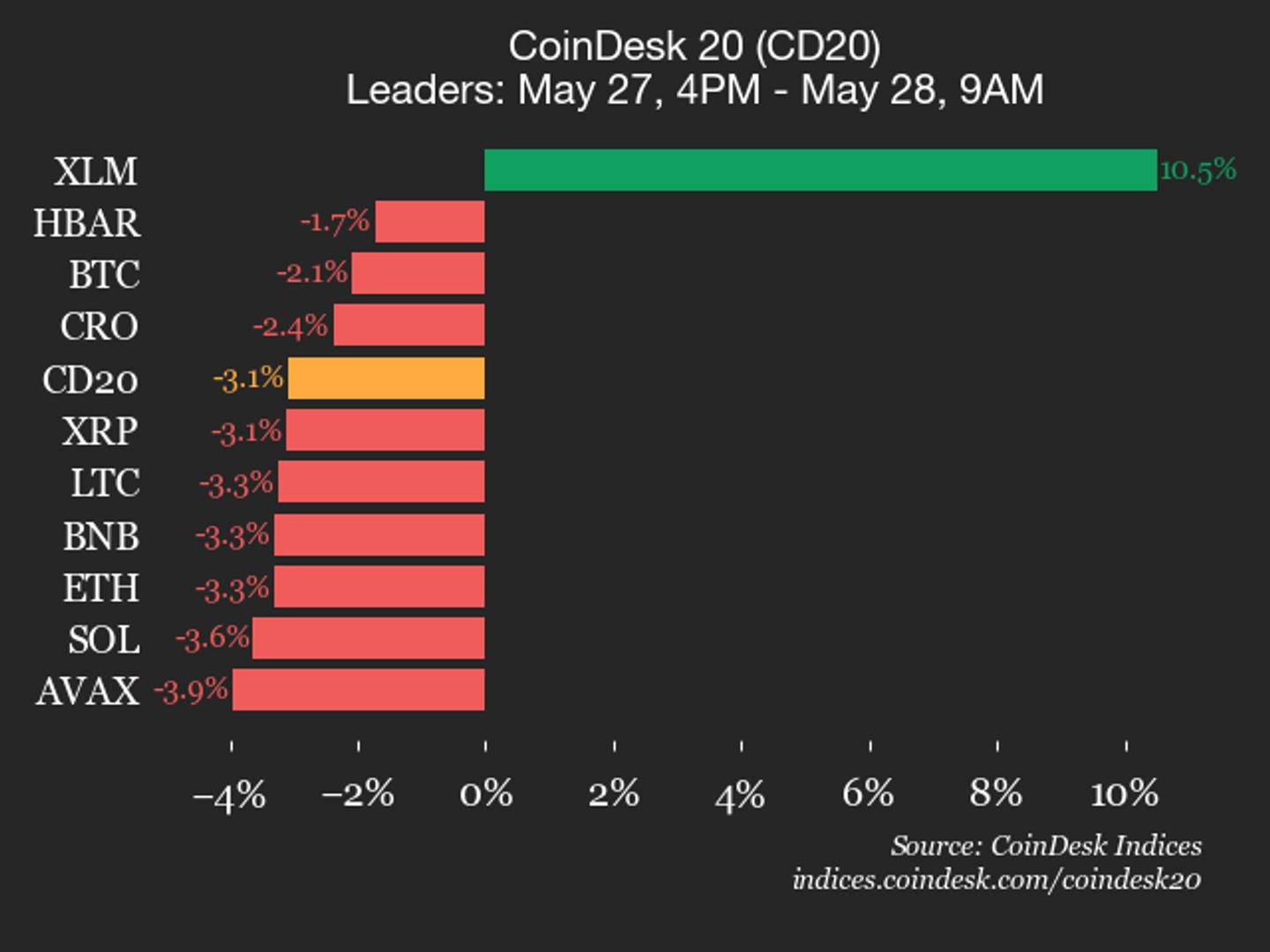
NEAR Protocol (NEAR) declined 12.2% while Bitcoin Cash (BCH) dropped 12.1%, leading the index lower....
Key takeaways
- 1CoinDesk 20 Index fell 3.1% to 1961.44, with NEAR down 12.2% and BCH down 12.1%.
- 2Stellar (XLM) gained 10.5%, the only significant gainer among the 20 assets.
- 3Bitcoin dropped below $73,000 amid U.S.-Iran tensions causing $1 billion in liquidations.
Coins in this story


Why it matters
Major index decline signals broad crypto market weakness affecting Indian retail investors' portfolios. Geopolitical events directly trigger significant liquidations, highlighting volatility risks in crypto investments.
Explore how RWA is shaping crypto markets — aggregated stories, leading coins, and weekly momentum.
Explore narrativeRelated stories

Bit Digital bought $20 million ETH for first time since October before 15% plunge
Bit Digital purchased 8,568 ETH ($20 million) on May 11, marking its first ethereum buy since October. ETH subsequently plunged 15% below $2,000, leaving the acquisition underwater by approximately $3 million. The move reflects bullish sentiment despite broader market turbulence, as most treasury firms have halted crypto accumulation amid volatile conditions and declining asset valuations.
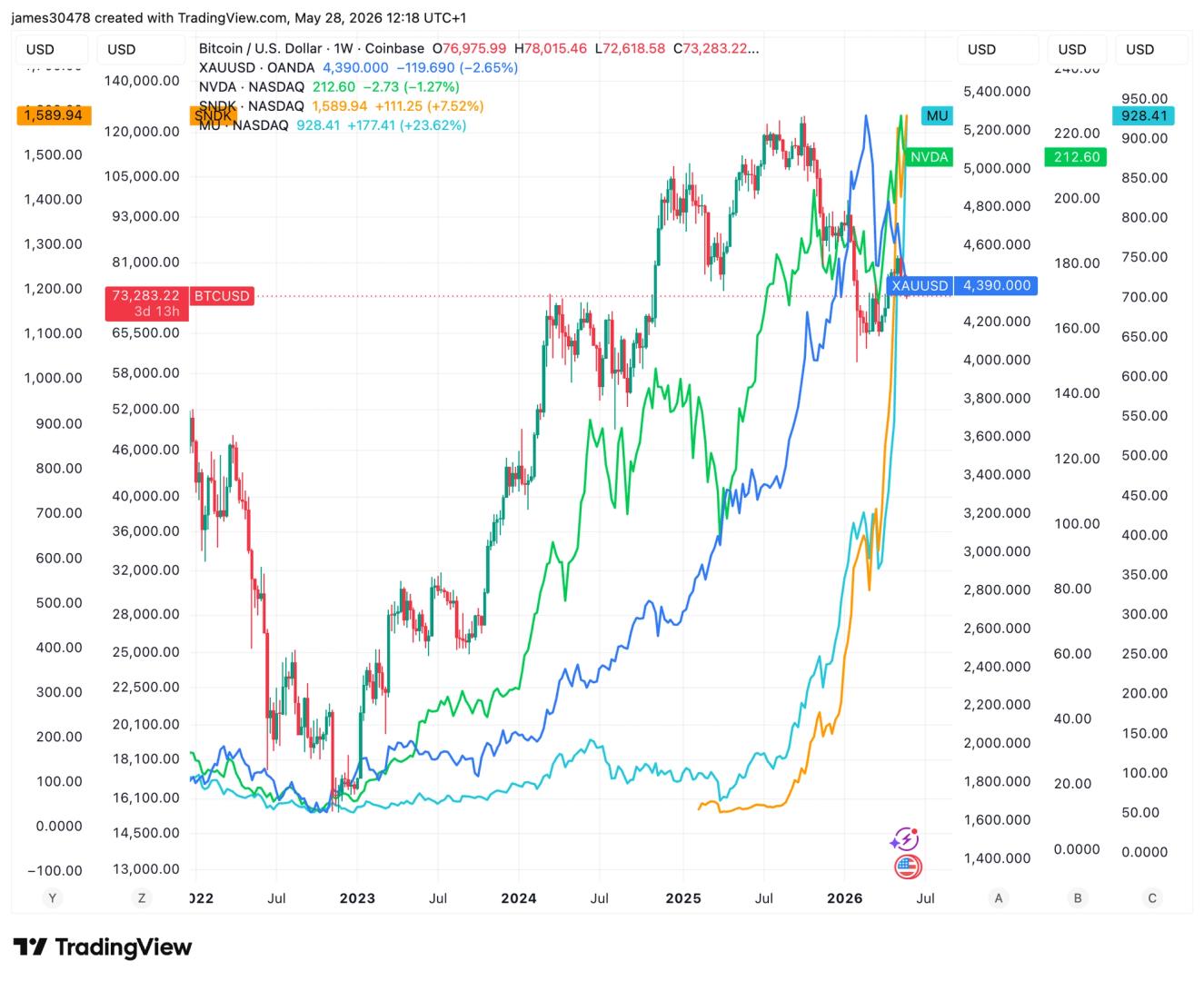
What's next as hot money cycle has gone from crypto to gold to AI to memory
Bitcoin's 650% rally from late 2022 to October 2025 has faded as hot money rotates toward memory chips and semiconductors. Gold and AI equities followed similar boom-bust cycles. Upcoming SpaceX, OpenAI, and Anthropic IPOs could become next speculative targets, potentially sidelining crypto from bull runs longer than expected. Indian investors should monitor sector rotation trends.
'Debasement trade’ falls out of favor as inflation fears cool, JPMorgan says
JPMorgan reports investors are abandoning bitcoin and gold as "debasement trade" momentum cools amid easing inflation concerns and potential U.S.-Iran peace negotiations. Bitcoin ETF outflows and reduced futures positions signal retreat from macro hedges that surged during Middle East tensions. The shift suggests markets are pricing in geopolitical stabilization, reducing demand for traditional inflation hedges and currency debasement protection strategies.