
How MiCA brings banks closer to controlling Europe’s stablecoin access
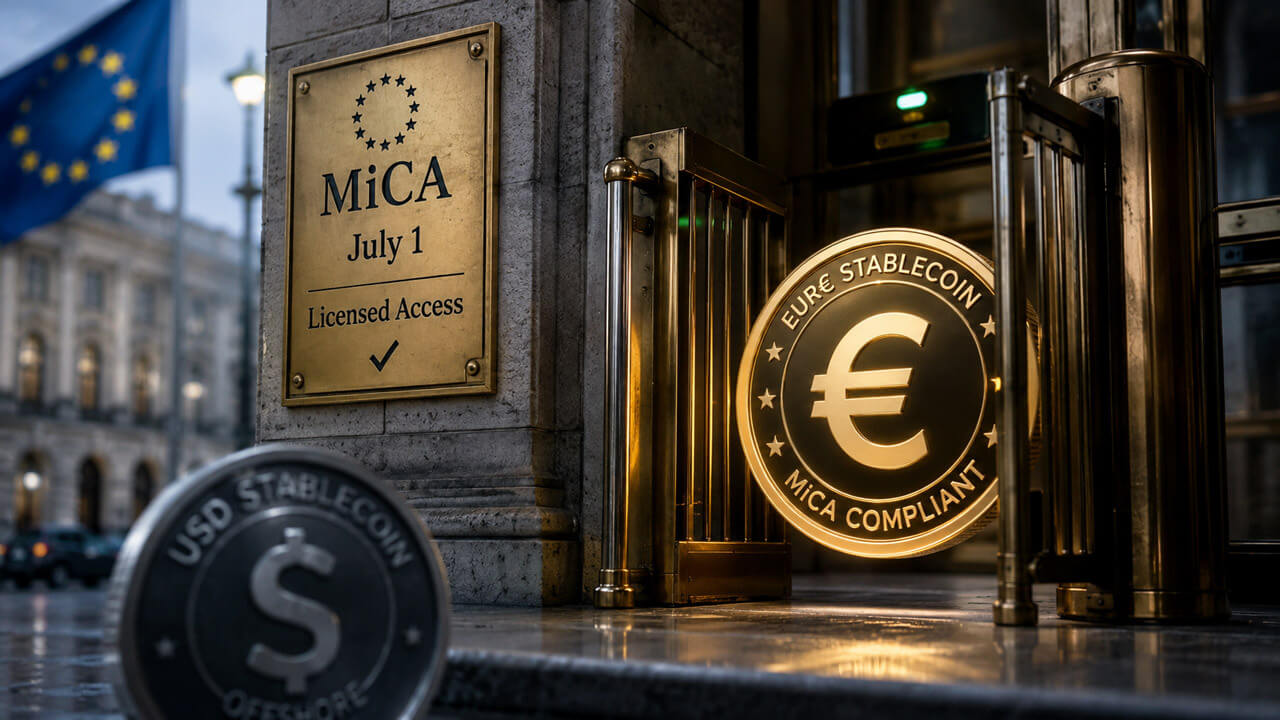
Europe's MiCA regulation is shifting from licensing into distribution control, empowering banks and authorized platforms over crypto access. Post-deadline rules force unauthorized firms to exit or transfer operations while MiCA-compliant stablecoins like Crédit Agricole's EURXT gain traction through regulated channels. The key question: whether EU users remain on compliant rails or seek offshore access and USDT liquidity outside regulatory perimeters.
Key takeaways
- 1MiCA's post-July 1 deadline shifted from licensing to distribution control, forcing unauthorized crypto firms to exit or transfer operations while authorized platforms gain market advantage.
- 2Crédit Agricole launched EURXT, a MiCA-compliant euro stablecoin on Ethereum, available through regulated banks and licensed platforms for institutional clients.
- 3EU users face a choice: remain on MiCA-compliant regulated rails or seek offshore access to USDT and unregulated crypto liquidity outside EU perimeter.
Coins in this story
Why it matters
For Indian retail investors, MiCA's regulatory gatekeeping signals how major markets are consolidating crypto access through traditional banking channels, potentially increasing compliance costs and limiting decentralized alternatives globally. This precedent may influence India's own stablecoin and crypto regulation, affecting cross-border trading routes and access to European-regulated assets.
Explore how RWA is shaping crypto markets — aggregated stories, leading coins, and weekly momentum.
Explore narrativeRelated stories



Ethereum’s treasury boom now has one company nearing 5% of supply
The company is 95% of the way to its 5% target, pushing the debate from another treasury update into supply, staking, and equity-market exposure. The post Ethereum’s treasury boom now has one company nearing 5% of supply appeared first on CryptoSlate....