
After MiCA deadline, majority of Binance users sent funds to self-custody not other compliant exchanges
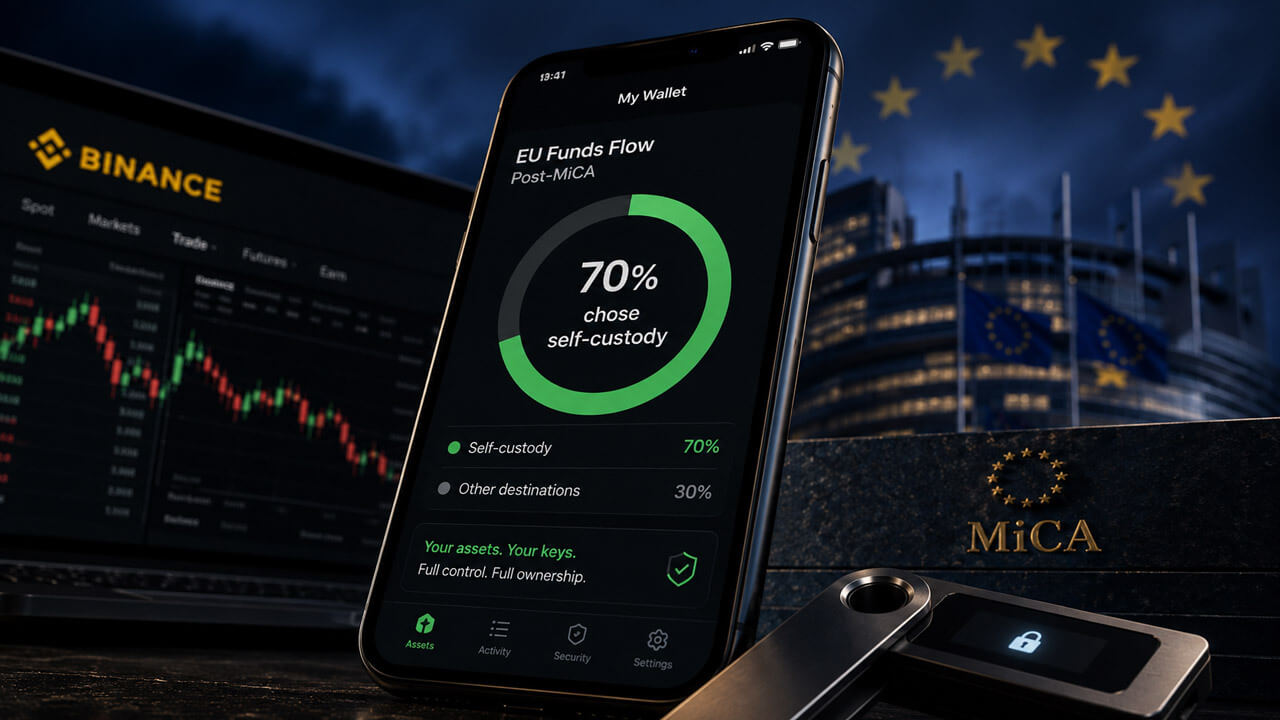
Following MiCA's July 1 deadline, Binance reported approximately 70% of EU-withdrawn funds moved to self-custody wallets rather than regulated competitor exchanges. Only 30% went to MiCA-compliant platforms, suggesting users prioritized personal control over switching to authorized rivals. The unaudited figures lack key details, leaving uncertainty about whether the regulation succeeded in shifting custody or merely fragmented the market.
Key takeaways
- 1After July 1 MiCA deadline, approximately 70% of Binance EU withdrawals went to self-custody wallets, only 30% to regulated exchanges.
- 2Users prioritized personal control over switching to MiCA-compliant competitor platforms despite regulatory incentives offered.
- 3Binance's unaudited figures lack asset values, user counts, and tracking methods, leaving uncertainty about regulation's actual effectiveness.
Why it matters
For Indian investors, this shows how strict crypto regulations may drive users toward self-custody rather than regulated platforms, fragmenting markets and reducing exchange liquidity. It signals that regulatory compliance alone cannot guarantee user adoption if it means losing established platforms, a precedent relevant as India shapes its own crypto framework.
Related stories

Japan stablecoin payments advance with Lawson trial, Netstars launch
Japan's Lawson convenience stores will trial yen stablecoin payments in August via HashPort's non-custodial wallet, while Netstars simultaneously launches merchant services supporting USDC, USDT, and JPYC across Solana and Polygon. These moves signal accelerating stablecoin adoption in retail, leveraging Japan's regulated framework established in 2023 to simplify merchant operations and reduce crypto complexity for consumers.
U.S. inflation, second-quarter earnings reports: Crypto Week Ahead
U.S. inflation data and bank earnings this week will shape Bitcoin's direction, with softer CPI potentially supporting rate cuts and stronger readings risking drops below $60,000. Ethereum's Glamsterdam upgrade testing and Solana's JTX app launch highlight ongoing developments. Macro events, Iran tensions, and China's GDP report add volatility. Multiple DAOs vote on governance measures while ARB and DBR unlock substantial token supplies, affecting market dynamics.

Bank of Thailand audits high-volume stablecoin trades to crack down on illicit finance: report
Bank of Thailand and SEC launched audits targeting high-volume stablecoin transactions, particularly USDT, using advanced data analytics to identify illicit finance activities. The crackdown aims to strengthen regulatory oversight of crypto markets in Southeast Asia. This development signals increasing scrutiny of stablecoin usage patterns globally and may impact trading volumes in Indian exchanges relying on USDT liquidity.