
Bitcoin, Nasdaq investors are celebrating, while U.S. consumers turn gloomy
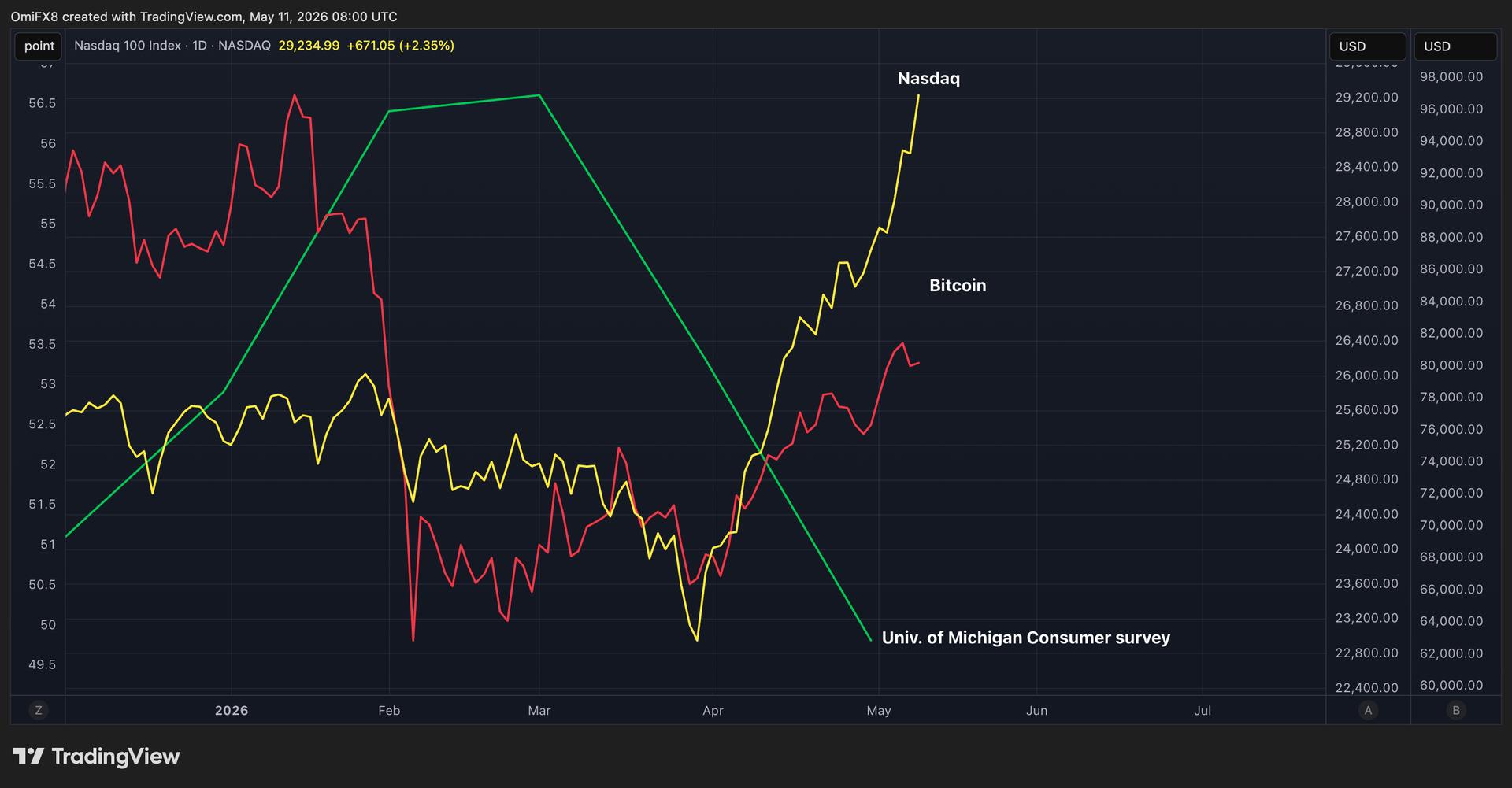
Bitcoin and Nasdaq rally 22% and 11.8% respectively while U.S. consumer sentiment hits record lows, creating a Wall Street-Main Street divide. Institutional capital flows into crypto and tech, decoupling Bitcoin from retail sentiment. Consumers face inflation and high living costs despite asset gains, revealing how crypto increasingly mirrors equity markets rather than serving financial democratization.
Key takeaways
- 1Bitcoin jumped 11.8% last month to $80,700 while Nasdaq surged 22% to 23,235 points, but U.S. consumer sentiment hit record lows of 48.2.
- 2Approximately 30% of American adults own crypto and 62% own stocks, yet consumers remain pessimistic due to inflation and high living costs.
- 3Institutional capital flows and ETF inflows have made Bitcoin increasingly correlated with equity markets rather than reflecting retail sentiment or financial democratization.
Coins in this story


Why it matters
For Indian retail investors, this highlights the growing institutionalization of crypto markets globally—Bitcoin now moves with tech stocks and macro cycles rather than grassroots sentiment. The widening Wall Street–Main Street gap suggests crypto may no longer serve as a hedge for everyday investors facing inflation, making it crucial to understand that institutional-driven rallies don't necessarily benefit retail participants.
Explore how AI Agents is shaping crypto markets — aggregated stories, leading coins, and weekly momentum.
Explore narrativeRelated stories
Bitcoin mining pools with 75% of BTC hashrate join open standard for block construction
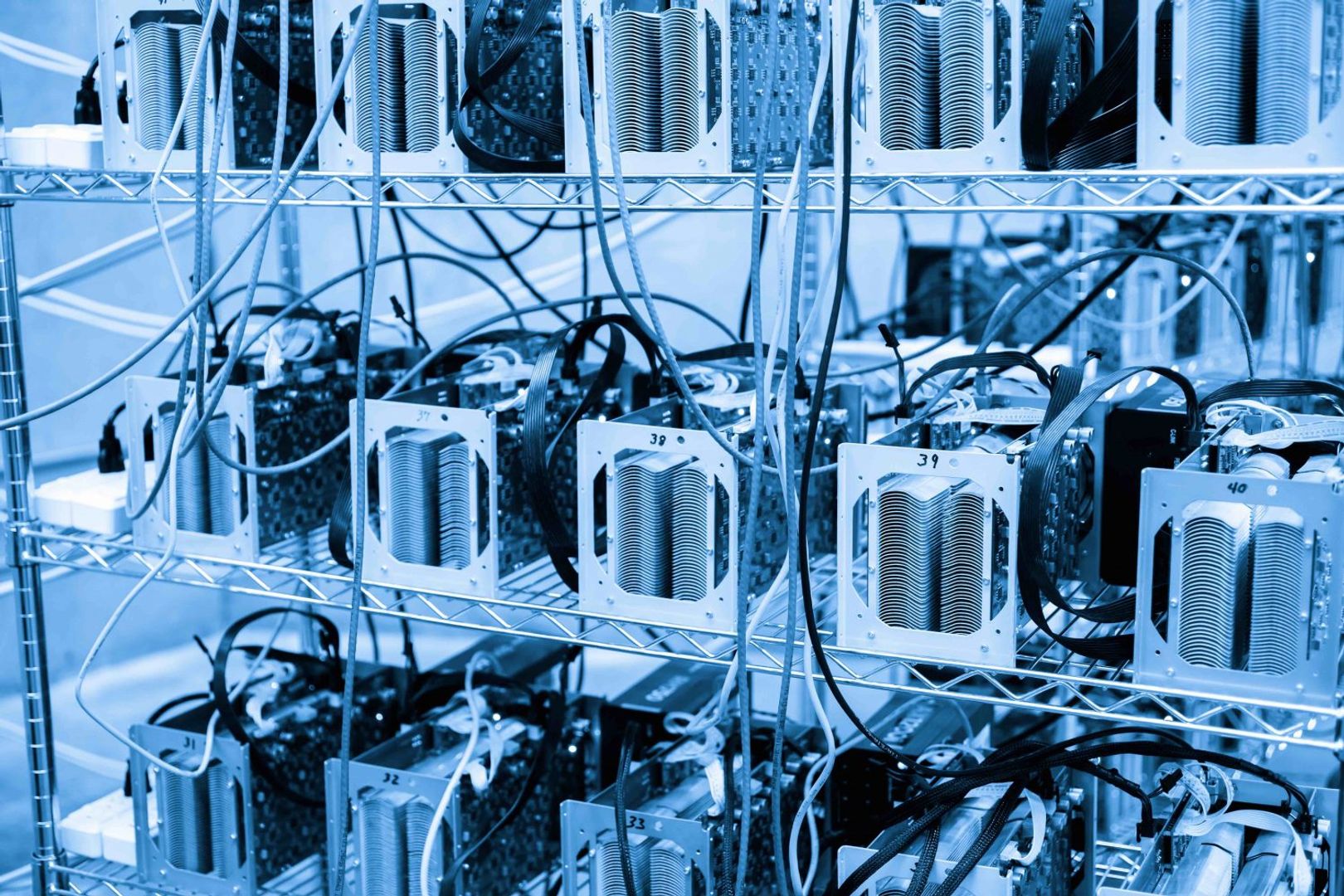
Seven major Bitcoin mining pools controlling 75% of global hashrate—Foundry, AntPool, F2Pool, SpiderPool, MARA Pool, Block Inc, and DMND—have joined the Stratum V2 working group. The open-source protocol shifts block construction decisions from pool operators to individual miners, reducing centralization risks. This marks Bitcoin's biggest mining decentralization move in years amid tight operator economics and rising network difficulty.